
When the Game Is Taken Away
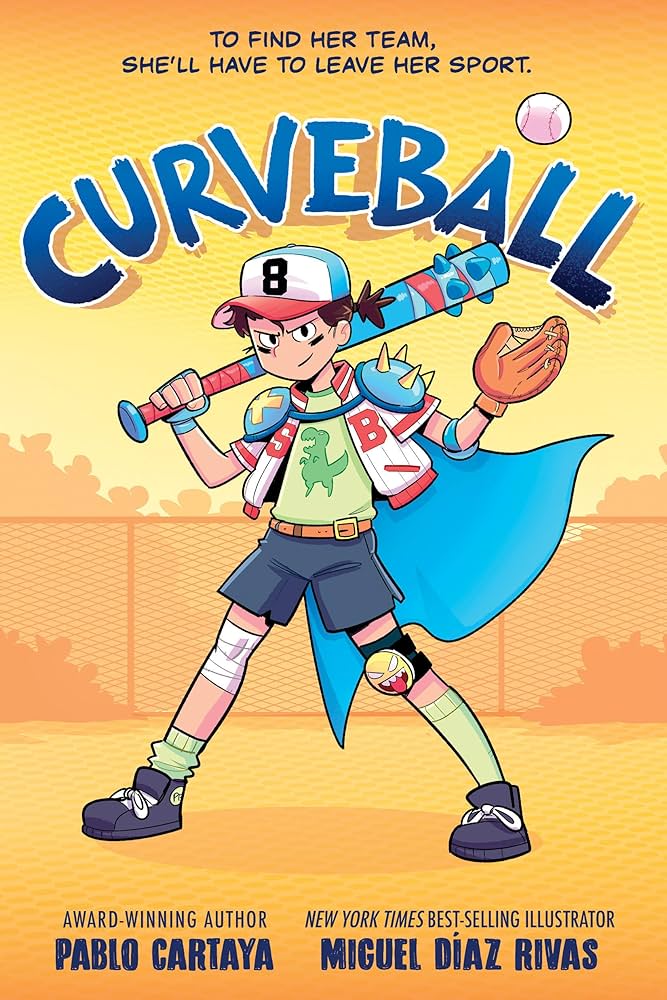
Elena Rueda is a serious athlete whose knee injury sidelines her from the sport she loves. It’s a quiet kind of devastation—not a villain, not a dramatic crisis, just the ordinary heartbreak of losing access to the thing that defines you. Cartaya takes Elena’s grief seriously, and readers will too.
What comes next is where the story surprises: Elena’s brother Benji invites her into his world of live action role playing (LARP). No scoreboards. No winners. Just imagination, movement, and the joy of showing up.
Identity Beyond Achievement
The story’s richest question is the one Elena must answer for herself: Who am I when I can’t do the thing I’m best at? It’s a question that will resonate with any child who has tied their self-worth to performance—and that’s most of them. Elena’s journey doesn’t end with her reclaiming her athletic identity. It ends with her discovering she’s larger than any single role.
The graphic novel format is a perfect fit for this story. Cartaya and illustrator Marel Díaz Ovalle let Elena’s emotions live in her face, her posture, the panels themselves—conveying what words alone sometimes can’t.
A Quiet but Powerful Message
In a culture that pushes kids to specialize and excel from an early age, “Curveball” makes a gentle but compelling case for the value of play without stakes. Activities done purely for joy—not for trophies or rankings—have real worth. Benji’s invitation to LARP is an act of sibling generosity that opens a door Elena didn’t know she needed.
“Curveball” is for any reader who has ever felt sidelined—by injury, rejection, or simply by life throwing something unexpected their way. It’s a story about resilience that doesn’t look like bouncing back. Sometimes it looks like finding a completely new direction, and being brave enough to follow it.
Perfect For
Readers in grades 3–5, especially those navigating setbacks or transitions. Graphic novel fans and reluctant readers. A great conversation-starter about identity, competition, and what it means to truly play.