
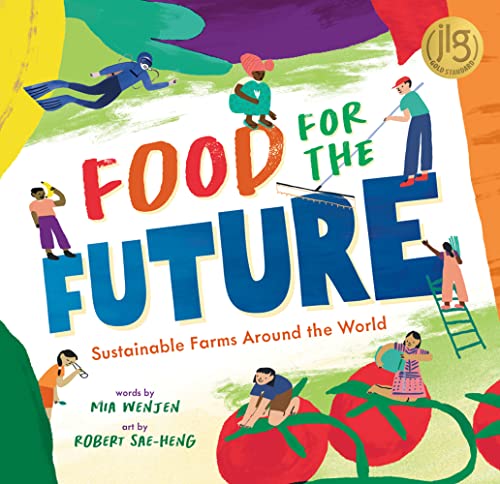
A Global Tour of Agricultural Innovation
“Food for the Future” distinguishes itself by taking a truly global perspective on sustainable agriculture. Rather than focusing on one region or one type of farming, Wenjen guides readers on a tour that spans continents, climates, and cultures. This approach demonstrates that sustainable farming isn’t a single solution but rather a diverse collection of practices adapted to local conditions, traditions, and needs.
The geographical diversity likely showcases how different environments require different approaches: rice paddies in Asia, rooftop gardens in cities, desert agriculture in arid regions, and even farms under the sea. This variety teaches readers that sustainable agriculture is about working with local conditions rather than imposing universal solutions.
Honoring Ancient Wisdom
One of the book’s most valuable aspects is its recognition that sustainable farming isn’t just about new technology—it’s also about traditional practices people have been using for centuries. By highlighting agricultural methods passed down through generations, Wenjen shows that indigenous knowledge and traditional farming techniques often embody the very sustainability principles modern science is rediscovering.
This approach teaches children to respect and learn from traditional knowledge systems, understanding that innovation doesn’t always mean inventing something new—sometimes it means preserving and adapting wisdom that has sustained communities for generations. Examples might include terraced farming, crop rotation, companion planting, or water conservation techniques that have proven effective over centuries.
From Urban Gardens to Undersea Farms
The range mentioned in the synopsis—from urban gardens to farms under the sea—suggests the book covers both the familiar and the extraordinary. Urban gardens represent accessible, community-based solutions that readers might implement themselves or observe in their own cities. These demonstrate how even people without traditional farmland can contribute to sustainable food production.
Farms under the sea represent the innovative edge of agricultural thinking—using ocean space to grow food in ways that don’t compete with land use, potentially growing seaweed, kelp, or even cultivating fish in sustainable ways. This diversity from the everyday to the futuristic keeps readers engaged while showing the full spectrum of sustainable agriculture.
Climate Change as Context and Catalyst
The book’s acknowledgment that new innovations are “battling the effects of climate change on farming” provides crucial context for why sustainable agriculture matters urgently. Climate change affects farming through changing weather patterns, increased droughts or floods, shifting growing seasons, and new pest pressures. By framing sustainable farming as a response to these challenges, Wenjen helps readers understand that this isn’t just about being “nice to the environment”—it’s about ensuring humanity can continue to feed itself.
This framing also empowers young readers by showing that people are actively working on solutions to climate change rather than just documenting problems. The book likely balances awareness of challenges with optimism about human ingenuity and adaptation.
Eco-Friendly Farming Principles
While the book tours different farms and methods, it likely explores common principles that make farming sustainable:
- Working with nature rather than against it: Using natural processes like pollination, composting, and biological pest control
- Conserving resources: Efficient water use, renewable energy, and minimizing waste
- Building healthy soil: Practices that maintain or improve soil health for future generations
- Biodiversity: Growing diverse crops and supporting ecosystems rather than monocultures
- Reducing chemical inputs: Minimizing or eliminating synthetic pesticides and fertilizers
- Local food systems: Reducing transportation needs and supporting local economies
Visual Storytelling
Robert Sae-Heng’s illustrations play a crucial role in making these global farming practices accessible and engaging for young readers. Quality illustrations can show the scale and beauty of different farming systems, help readers visualize unfamiliar practices, and create visual connections between different sustainable approaches around the world.
The illustrations likely bring to life everything from the intricate patterns of terraced hillsides to the organized chaos of urban rooftop gardens, from the geometric precision of vertical farms to the flowing underwater gardens of ocean agriculture. These visuals help readers who learn visually and make abstract concepts concrete.
Educational Value Across Disciplines
“Food for the Future” serves as an interdisciplinary educational resource connecting:
- Science: Understanding ecosystems, climate science, plant biology, and agricultural innovation
- Geography: Learning about different regions, climates, and how they affect farming
- Culture: Appreciating how food production is tied to cultural identity and traditional knowledge
- Economics: Understanding local food systems, sustainability as economic practice, and resource management
- Environmental Studies: Connecting agriculture to broader environmental health and climate action
- Technology: Seeing how innovation can solve real-world problems
Inspiration for Future Action
Beyond just informing readers about what others are doing, the book likely inspires action by showing what’s possible. Whether it’s starting a small garden, supporting local farmers, reducing food waste, or considering agricultural careers, the book provides models of positive engagement with food systems.
The diversity of examples—from high-tech vertical farms to simple community gardens—means readers can find entry points appropriate to their circumstances. Not everyone can start an undersea farm, but nearly everyone can start a container garden or support sustainable local agriculture.
Addressing Global Food Security
By showcasing diverse sustainable farming methods, the book implicitly addresses the critical question of how humanity will feed a growing population while facing climate change and resource limitations. Rather than presenting this as an unsolvable problem, Wenjen demonstrates that solutions exist and are being implemented worldwide.
This hopeful framing is important for young readers who might otherwise feel overwhelmed by environmental challenges. Seeing real people implementing real solutions builds agency and optimism about the future.
Connecting Readers to Their Food
In an era when many children are disconnected from food production, “Food for the Future” helps rebuild understanding of where food comes from and what it takes to grow it sustainably. This connection is crucial for developing informed citizens who can make thoughtful choices about food consumption and support sustainable agricultural practices.
The book likely helps readers appreciate the work and knowledge required to grow food, fostering respect for farmers and agricultural workers while understanding the complexity of feeding the world sustainably.
A Message of Hope and Possibility
“Food for the Future” ultimately delivers a message that combines realism about challenges with optimism about solutions. Yes, climate change affects agriculture and threatens food security. But humans around the world are innovating, adapting, and working with nature to ensure we can continue to grow food sustainably.
The book celebrates human creativity and resilience while honoring both ancient wisdom and modern innovation. It shows that sustainable agriculture isn’t just possible—it’s happening right now, all around the world, and young readers can be part of this important work.
Perfect for Curious Minds
Wenjen has created a book that satisfies children’s natural curiosity about the world while also equipping them with knowledge they can use. Whether readers are interested in science, travel, food, environmental issues, or solving problems, “Food for the Future” offers engaging content that connects to their interests while expanding their understanding of how we can feed the world sustainably.
The combination of ancient practices and cutting-edge innovation, familiar examples and exotic ones, demonstrates that sustainable agriculture is a living, evolving field where tradition and innovation work together—and where today’s young readers will play a crucial role in determining the future of food.