
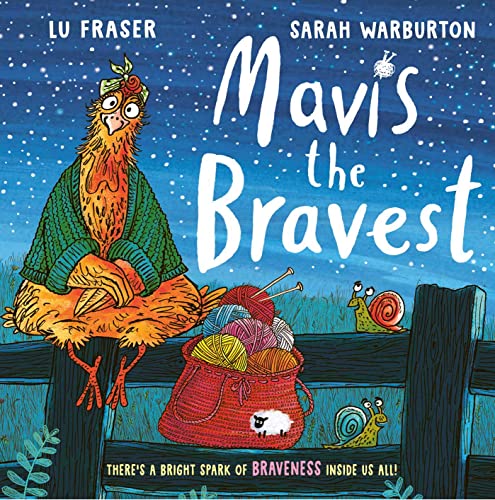
Lu Fraser has created a delightfully charming and empowering story in “Mavis the Bravest,” beautifully brought to life by Sarah Warburton’s illustrations. This heartwarming tale celebrates the truth that bravery isn’t about never being scared—it’s about acting when it matters most, even when everything feels frightening.
A Story About Unlikely Heroes
“Mavis the Bravest” follows Mavis, a chicken who is absolutely nothing like her adventurous friend Marge. While Marge embraces excitement and new experiences, Mavis finds EVERYTHING scary—from night-time to daytime to anything hairy. Her fearful nature seems to define who she is, making her an unlikely candidate for heroism.
But when their friend Sandra the sheep is in real danger—someone is trying to steal her from their cozy barn—Mavis faces a crucial moment. Will she be able to find her “bright spark of braveness” and save Sandra, despite all her fears? This setup creates a story that resonates with anyone who has ever felt too scared to act, showing that courage can emerge in the most unexpected moments and from the most unlikely heroes.
Themes That Inspire and Encourage
The novel explores several meaningful themes that will connect with young readers facing their own fears:
- Courage comes from caring: Mavis discovers that when someone you care about needs help, you can find bravery you didn’t know you had
- Being scared doesn’t mean you can’t be brave: The story beautifully illustrates that bravery isn’t the absence of fear, but acting despite it
- Everyone has different personalities and that’s okay: The contrast between fearful Mavis and adventurous Marge shows that people can be friends while being very different
- Crisis reveals hidden strengths: Sometimes we don’t know what we’re capable of until we’re truly needed
- Friendship motivates action: Love and concern for friends can inspire us to overcome our own limitations
- Small creatures can do big things: Mavis proves that you don’t have to be big or naturally brave to be a hero
The Power of Contrast
One of the story’s most effective elements is the contrast between Mavis and Marge. By establishing Marge as the adventurous friend, Fraser creates a clear expectation that if anyone is going to save Sandra, it would be Marge. This makes Mavis’s eventual heroism all the more powerful and surprising.
This contrast also validates different personality types. The story doesn’t suggest that Mavis should become like Marge or that being cautious is wrong. Instead, it shows that even someone who is naturally fearful has the capacity for bravery when circumstances demand it.
The Relatability of Fear
Fraser’s description of Mavis finding everything scary—”night-time and daytime and anything hairy”—creates a wonderfully relatable character. The humor in this exaggeration (even daytime is scary!) makes Mavis endearing rather than pathetic, and young readers will recognize their own sometimes-overwhelming fears in her character.
By making Mavis’s fear so comprehensive, Fraser sets up an even more impressive transformation when Mavis does find her courage. If someone who is scared of everything can be brave, then surely any reader facing their own fears can find that same spark.
A Cozy Setting with High Stakes
The barn setting creates a sense of home and safety that makes the intrusion of danger all the more alarming. The “slumbering peace” being disturbed represents a violation of safety and security that demands response. Fraser establishes the barn as a place of friendship and comfort, making Sandra’s potential loss deeply meaningful.
The sheep-stealing threat provides age-appropriate stakes that are serious without being traumatizing. Young readers understand the wrongness of theft and the importance of protecting friends, making the danger real without being overwhelming.
The “Bright Spark of Braveness”
Fraser’s phrase “bright spark of braveness” creates a beautiful image of courage as something that can be kindled even in the most unlikely places. This metaphor suggests that bravery isn’t a permanent state or an inherent trait, but rather something that can ignite when needed—a spark that can grow into action.
This concept is particularly empowering for children who see themselves as naturally fearful. Rather than suggesting they need to fundamentally change who they are, the story proposes that everyone has the capacity for courage within them, waiting for the right moment to emerge.
Visual Storytelling
Sarah Warburton’s illustrations undoubtedly play a crucial role in bringing Mavis’s transformation to life. The visual representation of a nervous chicken finding courage likely provides both humor and heart, helping young readers see themselves in Mavis’s journey from fearful to brave.
The illustrations probably capture both the comedy of Mavis’s comprehensive fearfulness and the genuine emotion of her decision to act despite her terror, creating a visual narrative that reinforces the story’s message about courage.
Perfect for Discussing Fears and Courage
“Mavis the Bravest” provides an excellent framework for conversations about fear and bravery with young children. Because Mavis’s fears are presented with gentle humor rather than harsh judgment, the story creates a safe space for children to acknowledge their own fears while also considering how they might respond when their help is truly needed.
The story avoids the common pitfall of suggesting that brave people don’t feel fear. Instead, it shows that feeling scared is normal and universal, but that we can choose to act despite our fear when something important is at stake.
Celebrating Different Kinds of Strength
While Marge represents one kind of strength—the natural adventurer who embraces new experiences—Mavis represents another: the person who overcomes their own nature to do what needs to be done. The story suggests that Mavis’s bravery might actually be more impressive precisely because it’s harder for her.
This validation of different personality types helps children understand that they don’t all need to be natural risk-takers or adventurers to be capable of courage and heroism.
Friendship as Motivation
At its heart, “Mavis the Bravest” is a story about how love for friends can motivate us to overcome our own limitations. Sandra isn’t just an abstract concept—she’s Mavis’s friend, someone she cares about and shares the cozy barn with. This personal connection transforms the situation from a general danger into something that demands Mavis’s personal response.
This aspect of the story teaches children about the responsibilities and rewards of friendship. Friends look out for each other, and sometimes that means being braver than we thought we could be.
A Story for Every Fearful Child
“Mavis the Bravest” ultimately offers hope and encouragement to every child who has ever felt too scared to do something important. By showing that even someone who finds everything scary can discover courage when it truly matters, Fraser creates a story that empowers rather than shames, encourages rather than lectures.
The story acknowledges fear as real and valid while also suggesting that it doesn’t have to be limiting. Mavis doesn’t stop being a chicken who finds things scary—but she discovers that she can be scared AND brave at the same time.
A Celebration of Unlikely Heroes
Fraser’s story celebrates the truth that heroes come in all personalities and temperaments. You don’t have to be naturally brave, naturally adventurous, or naturally confident to do heroic things. Sometimes the most courageous acts come from people who are terrified but choose to act anyway because someone they love needs them.
“Mavis the Bravest” reminds readers that we all have that bright spark of braveness within us, waiting for the moment when it’s needed most. And when that moment comes, even the most unlikely among us can discover that we’re braver than we ever imagined.