
A Premise Rooted in Universal Grief
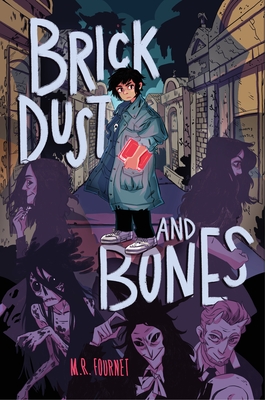
“Brick Dust and Bones” follows twelve-year-old Marius Grey, a Cemetery Boy whose job is to tend the ghosts in his family’s graveyard. But Marius isn’t content with his assigned duties or with following the rules about living between worlds. He has a singular, consuming goal: bring his mother back from the dead. This isn’t a casual wish or idle fantasy—it’s a desperate plan with specific requirements, a ticking clock, and increasingly dangerous consequences.
The premise taps into one of humanity’s most profound desires: the wish to reverse death and reclaim those we’ve lost. Every reader who has experienced loss will understand Marius’s desperation, even as they might question his methods. This emotional foundation gives the story tremendous power and raises genuine moral and philosophical questions about grief, acceptance, and the natural order of life and death.
A World Between Worlds
Fournet creates a richly imagined supernatural New Orleans where the boundary between life and death is permeable but regulated. Marius lives between worlds—literally and figuratively—as someone who can interact with both the living and the dead. This liminal existence, where he should be “going to school to learn how to live between worlds without getting into trouble,” suggests a complex magical system with rules, consequences, and a whole society built around managing the supernatural.
The detail that Marius’s job is to “tend” ghosts—not fight monsters—establishes an important distinction. There’s apparently a proper, sanctioned way to interact with the supernatural (tending ghosts in the family graveyard) and a dangerous, forbidden way (hunting monsters for bounty). Marius’s choice to pursue the latter despite being “not supposed to” sets up immediate tension between duty and desire, safety and risk.
The Economics of Resurrection
One of the story’s most intriguing elements is how it makes resurrection concrete and transactional. Marius needs “a LOT of mystic coins,” which means resurrection isn’t just magically difficult—it’s financially expensive. This detail transforms what could be an abstract quest into something material and measurable, with clear stakes and a visible path forward (even if it’s dangerous).
The mystic coin economy also creates moral complexity. Monster hunting apparently pays well, suggesting a structured bounty system with its own rules, markets, and dangers. The phrase “gritty monster bounty-hunting market” evokes a whole underground economy where supernatural creatures are commodified and their elimination is profitable. This raises questions about what counts as a “monster,” who decides, and whether killing for profit—even with a noble goal—can be justified.
The Ticking Clock
The detail that Marius’s “mother’s window to return is closing” adds crucial urgency to the story. This isn’t an open-ended quest—there’s a deadline, which means Marius must take increasingly desperate and dangerous actions as time runs out. The ticking clock raises the stakes dramatically and forces Marius into situations he might otherwise avoid.
This time pressure also suggests rules about death and resurrection: there’s apparently a specific window during which the dead can be brought back, after which they’re gone permanently. These kinds of magical rules create structure and consequences that make the supernatural elements feel grounded and believable.
Escalating Danger
The synopsis’s progression is telling: Marius starts by hunting monsters (already dangerous), but realizes he needs to go after “bigger and meaner monsters” to earn enough coins in time. This escalation pattern is classic risk-taking behavior driven by desperation. As the deadline approaches, Marius must venture further into danger, facing increasingly powerful creatures that could very likely kill him.
This escalation also represents Marius’s growing desperation and his willingness to risk more and more to achieve his goal. It’s the behavior of someone who has lost perspective and is sliding toward increasingly dangerous choices—a trajectory that feels psychologically authentic for someone consumed by grief and the possibility of undoing it.
Themes of Loss, Grief, and Acceptance
At its core, “Brick Dust and Bones” explores how we cope with loss and when trying to reverse death becomes more harmful than healing. Marius’s quest represents the bargaining stage of grief taken to its extreme—if he can just get enough coins, face enough monsters, take enough risks, maybe he can undo the loss that’s devastated him.
The story likely explores whether Marius’s goal is even truly possible, whether getting what he wants would really solve his grief, and what the cost of resurrection might be beyond just mystic coins. These questions give the story philosophical and emotional depth beyond its monster-hunting adventure elements.
The New Orleans Setting
Setting the story in New Orleans adds tremendous atmospheric richness. The city is already associated with death, ghosts, cemeteries, voodoo, and the supernatural in American cultural imagination. Its above-ground cemeteries (cities of the dead), its history of blending spiritual traditions, and its reputation for existing between worlds make it the perfect setting for a story about a boy who tends graves and hunts monsters.
The “gritty” descriptor suggests Fournet isn’t romanticizing New Orleans but rather showing its dangerous underside—the supernatural black market, the predatory elements that would exploit a grieving child, and the real dangers lurking in the shadows.
A Twelve-Year-Old in Adult Situations
Marius’s age—twelve—makes his situation particularly poignant and dangerous. He’s still a child, yet he’s operating in what sounds like an adult world of monster hunting, bounty markets, and high-stakes risks. This vulnerability adds another layer of tension: not only is Marius facing literal monsters, but he’s also navigating adult systems and markets that likely see him as either prey or a resource to exploit.
The detail that he “should be” in school learning proper supernatural protocols emphasizes how far off track he’s gotten. His truancy isn’t just about skipping regular school—it’s about abandoning his education in how to safely exist in his supernatural reality, making him even more vulnerable to the dangers he’s pursuing.
Moral Complexity and Difficult Questions
“Brick Dust and Bones” likely raises uncomfortable questions about grief and desperation. Is Marius’s quest admirable devotion to his mother, or is it an unhealthy refusal to accept her death? Are the monsters he’s hunting truly monstrous, or is the real monster the system that would sell a child the hope of resurrection? What about the ghosts Marius is neglecting—do they deserve care even if they’re not his mother?
The story probably doesn’t offer easy answers, instead allowing readers to grapple with the complexity of Marius’s situation and the moral ambiguity of his choices.
The Question of Success
The synopsis asks whether Marius can “navigate New Orleans’s gritty monster bounty-hunting market, or will he have to say goodbye to his mother forever?” This framing suggests the story might not end with simple success or failure. Even if Marius gets the coins, resurrection might not work as expected, or the cost might be higher than he imagined. Alternatively, learning to “say goodbye” might represent a different kind of victory—one that’s emotionally harder but perhaps healthier.
A Story About What We Risk for Love
Ultimately, “Brick Dust and Bones” is a story about the extremes of love and grief. Marius is willing to risk everything—his safety, his education, his responsibilities, potentially his life—for the chance to bring his mother back. This desperation is both heartbreaking and concerning, making Marius a deeply sympathetic character whose choices readers might simultaneously understand and worry about.
Atmospheric and Emotionally Rich
Fournet’s combination of supernatural New Orleans, monster hunting, and profound grief creates a story that operates on multiple levels. There’s the surface adventure—a boy hunting increasingly dangerous monsters—but underneath is an exploration of loss, the stages of grief, and the question of when holding on becomes more harmful than letting go.
The “brick dust” and “bones” of the title evoke both the physical reality of cemeteries (brick tombs, human remains) and the gritty, visceral nature of the story. This isn’t a sanitized fantasy about death—it’s a story that confronts mortality directly, along with all the desperation, danger, and difficult choices that come with trying to deny it.
Perfect for Readers Ready for Complexity
“Brick Dust and Bones” offers the kind of emotionally complex, morally ambiguous storytelling that middle grade readers transitioning to young adult literature crave. It takes its protagonist’s pain seriously, doesn’t offer easy answers, and explores the shadow side of love—the way desperation can drive us toward increasingly dangerous choices.
The novel ultimately invites readers to consider what they would risk for those they love, when fighting death becomes futile or even harmful, and how we can honor those we’ve lost without destroying ourselves in the process. Through Marius’s journey through New Orleans’s supernatural underworld, Fournet creates a story that’s both thrilling adventure and profound meditation on grief, love, and the difficult work of letting go.