
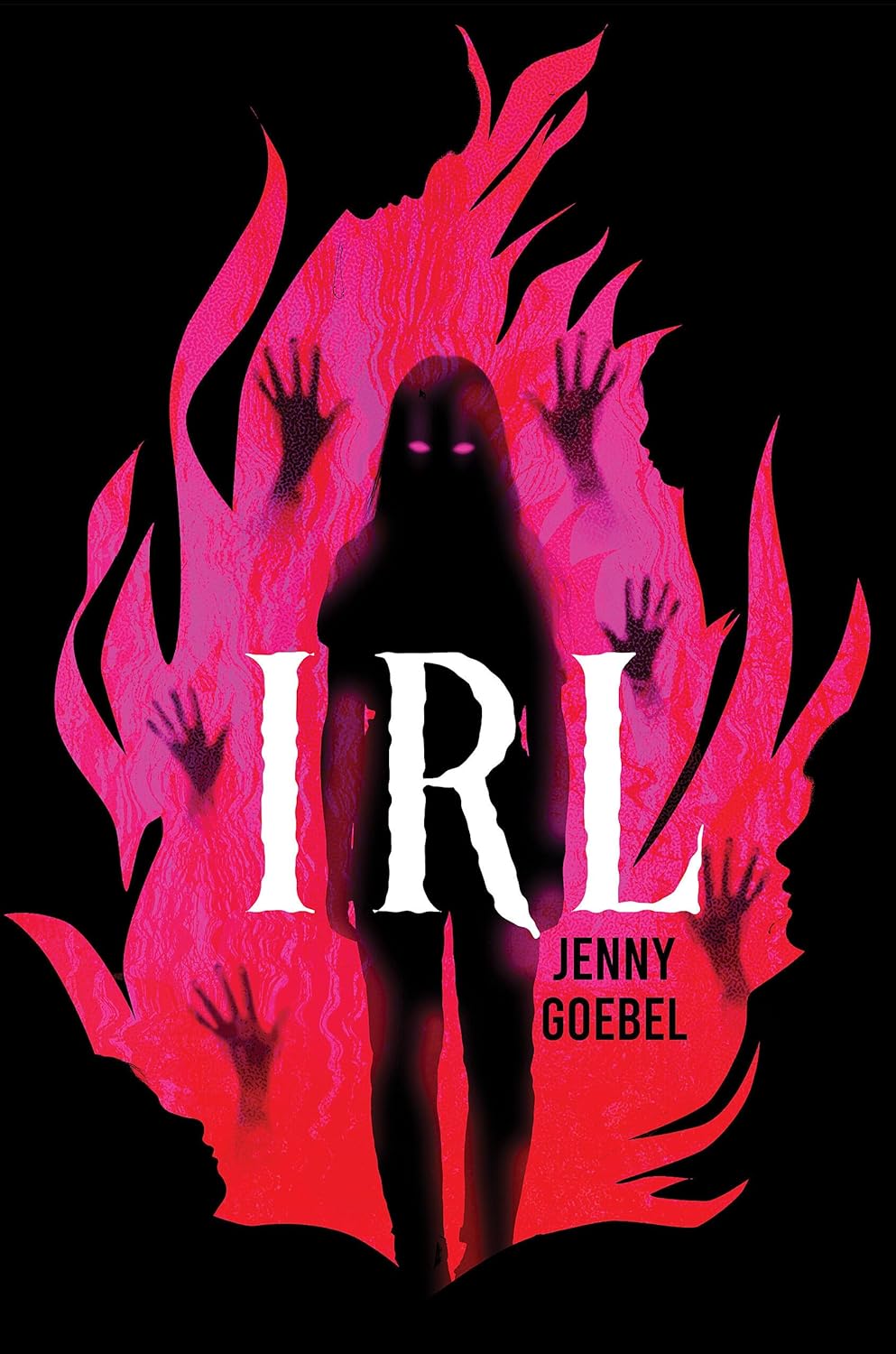
Thirteen Students, and They’re All So Nice
Here’s what surprises Lucy: her new class is wonderful. There are only thirteen of them, and they are warm, welcoming, funny, and kind. The friendships she builds feel real. More real, maybe, than anything she had before. As winter thaws and the prospect of meeting everyone in person approaches, Lucy finds herself genuinely excited. She has friends. Actual ones.
Then she arrives at school. And nothing is what she thought it was.
The Twist That Changes the Book
Goebel has constructed “I.R.L.” around a central mystery that sharpens as the novel progresses: are Lucy’s online classmates who they say they are? The revelation—described in the summary as “far, far more horrifying” than a prank—recontextualizes everything that came before. Readers who trusted the friendships alongside Lucy will feel the ground shift underneath them in exactly the way Goebel intends.
The novel is part contemporary realistic fiction, part mystery, and part something harder to categorize—a story about the risks of online connection and the terrifying gap between who someone seems to be and who they actually are.
The Questions the Book Asks
“I.R.L.” takes seriously the question that defines so much of adolescent life online: how do you know if a connection is real? Lucy’s experience is an extreme version of something most teens navigate in smaller ways every day—the tension between the warmth of an online friendship and the uncertainty of never fully knowing the person behind the screen.
Goebel doesn’t offer easy answers. She offers a story that earns its twists, keeps readers turning pages, and leaves them thinking about digital connection, vulnerability, and what it means to truly know someone.
Perfect For
Grades 6–8 readers who love mystery, suspense, and contemporary fiction with unexpected turns. A timely conversation-starter about online safety, digital identity, and the nature of friendship. Pairs well with media literacy discussions. Not for readers who want their mysteries gentle—this one has teeth.