
A Premise Every Kid Understands
“The Adventures of Invisible Boy” begins with a universally relatable scenario: Stanley is facing his first day at a new school, and he wishes he could just disappear. Every child who has ever felt nervous, out of place, or overwhelmed by new situations will immediately connect with Stanley’s desire to become invisible and avoid all the awkwardness and anxiety that comes with being the new kid.
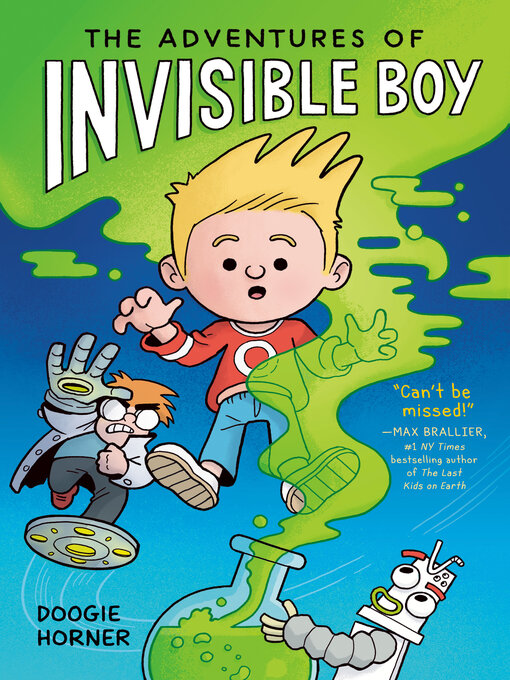
But then something extraordinary happens. After a big spill at the science fair—POOF!—Stanley actually becomes invisible! What starts as an anxious wish suddenly becomes an incredible reality, opening up a world of possibilities. At first, it seems awesome: Stanley can do anything he wants, and no one will know!
From Wish Fulfillment to Moral Reckoning
Horner expertly navigates the “be careful what you wish for” territory by making Stanley’s invisibility both exciting and complicated. The initial thrill of invisibility—the freedom to move unseen, to avoid embarrassment, to potentially get away with anything—quickly becomes more complex when Stanley realizes that his invisibility isn’t just about him.
The inventor whose project Stanley accidentally ruined has his own reaction to the disaster, and it’s not a good one. His plans to take revenge on kids all over town, including Stanley, transform the story from a personal adventure into a situation with real stakes for others. Suddenly, Stanley’s invisibility becomes not just a cool power, but a responsibility and a tool he might need to use to protect people.
Themes That Resonate and Challenge
The novel explores several meaningful themes that will engage readers while making them think:
- Being seen vs. being invisible: The story explores the difference between literally being invisible and feeling invisible or unnoticed in social situations
- Power and responsibility: Stanley must grapple with how to use his invisibility—for personal gain, for fun, or to help others
- Consequences of our actions: The science fair accident sets off a chain of events showing how one moment can have far-reaching effects
- Standing up for others: Stanley’s journey from wanting to disappear to potentially having to be a hero shows growth and moral development
- The new kid experience: The story validates the difficulty of starting over at a new school while showing how challenges can lead to unexpected opportunities
- Revenge vs. justice: Through the inventor’s actions, readers see the destructive nature of anger and revenge versus more positive responses to setbacks
The Science Fair Accident as Catalyst
The spill at the science fair serves as a perfect catalyst for the story’s action. Science fairs are already situations filled with anxiety, competition, and the pressure to succeed—adding an accident that ruins someone’s project and somehow causes invisibility creates multiple layers of conflict and interest.
The fact that the inventor can identify Stanley (even though he’s invisible) adds a crucial element of accountability to the story. Stanley can’t just disappear into his invisibility and ignore the consequences of the accident. Someone knows who he is and where to find him, creating tension and preventing the invisibility from becoming a simple escape from all problems.
From Victim to Hero
One of the story’s most compelling arcs is Stanley’s transformation from someone who wanted to disappear (a somewhat passive, defensive wish) to someone who might need to use his invisibility to protect others (an active, heroic choice). This journey from wanting to hide to choosing to stand up—even while invisible—represents significant character growth.
The “battle of the ages” promised in the description suggests that Stanley will need to move beyond his initial fears and use his unique situation to confront a threat that endangers other kids. This transformation from nervous new kid to unlikely hero provides an empowering narrative arc that will resonate with readers.
The Appeal of Invisibility
Horner taps into a nearly universal childhood fantasy: What would you do if you were invisible? The story allows readers to explore this fantasy vicariously through Stanley while also examining the more complex aspects of such power. Would you use it just for fun? To spy on people? To get away with things? Or would you find yourself called to use it for something more meaningful?
By giving Stanley a genuine reason to use his invisibility for good—protecting other kids from the inventor’s revenge—Horner elevates the story beyond simple wish fulfillment into something with moral weight and real stakes.
Humor and Heart
Based on the premise and Horner’s approach, “The Adventures of Invisible Boy” likely balances humor with genuine emotion. The absurdity of invisibility, the mishaps and adventures it enables, and Stanley’s fish-out-of-water status as the new kid all provide opportunities for comedy. But underneath the fun, there’s a story about a boy dealing with real anxiety, real consequences, and the real challenge of figuring out who he wants to be.
The Inventor as Antagonist
The inventor character adds depth to what could have been a simple power-fantasy story. Rather than making the villain a stereotypical bully or criminal, Horner creates an antagonist whose anger stems from having his work ruined. While his response—taking revenge on kids all over town—is clearly wrong, his initial frustration is understandable, adding complexity to the conflict.
This setup allows for exploration of themes like proportional response, handling disappointment, and the destructive nature of revenge. The inventor’s choice to lash out at innocent children because of his anger shows readers what happens when someone lets negative emotions control their actions.
Perfect for Adventure Lovers
“The Adventures of Invisible Boy” offers the kind of high-stakes, action-packed storytelling that keeps readers turning pages. The promise of a “battle of the ages” suggests exciting confrontations and clever problem-solving as Stanley figures out how to use his invisibility to counter the inventor’s schemes.
The combination of personal stakes (Stanley’s new school struggles), moral questions (how should he use his power?), and external conflict (protecting other kids from the inventor) creates a multi-layered adventure that works on several levels simultaneously.
Exploring Social Invisibility
One of the story’s most resonant aspects is likely its parallel between literal invisibility and the social invisibility many kids feel, especially when they’re new or don’t fit in. Stanley’s wish to disappear comes from feeling conspicuous and uncomfortable—ironically, he probably already felt somewhat invisible in terms of not having friends or connections at his new school.
This duality allows the story to explore both the fantasy of literal invisibility and the very real pain of feeling unseen, unimportant, or disconnected from a community. Stanley’s journey likely involves learning that being truly seen—having real connections and relationships—is ultimately more valuable than the power to be unseen.
A Story About Finding Your Place
Underneath the adventure and the invisibility powers, “The Adventures of Invisible Boy” is fundamentally a story about a kid finding his place in a new environment. Stanley starts wanting to disappear, but through his adventures, he’ll likely discover reasons to want to be seen—friends to make, people to protect, a community to be part of, and a sense that he matters and can make a difference.
Empowerment Through Adversity
The story offers an empowering message: even when you feel small, scared, or invisible, you have the capacity to be important and make a difference. Stanley’s accidental acquisition of invisibility becomes the tool through which he discovers his own courage and capability. What starts as an escape from discomfort becomes a means of facing challenges head-on.
An Adventure with Heart and Humor
“The Adventures of Invisible Boy” combines the excitement of superpowers with the emotional reality of being the new kid, creating a story that’s both entertaining and meaningful. Stanley’s journey from wanting to disappear to becoming a hero who protects others offers readers a compelling character arc, while the inventor’s revenge plot provides genuine stakes and excitement.
Horner has created a story that validates children’s real feelings of anxiety and displacement while also celebrating their potential for bravery, resourcefulness, and heroism. It’s a reminder that sometimes the things we wish for might come true in unexpected ways, and that our greatest challenges can reveal our greatest strengths. Stanley may have wanted to be invisible, but his story is about learning to be seen—and discovering that being seen, being present, and being part of a community is actually what makes life meaningful.